

In Conversation with Thabiso Phepeng
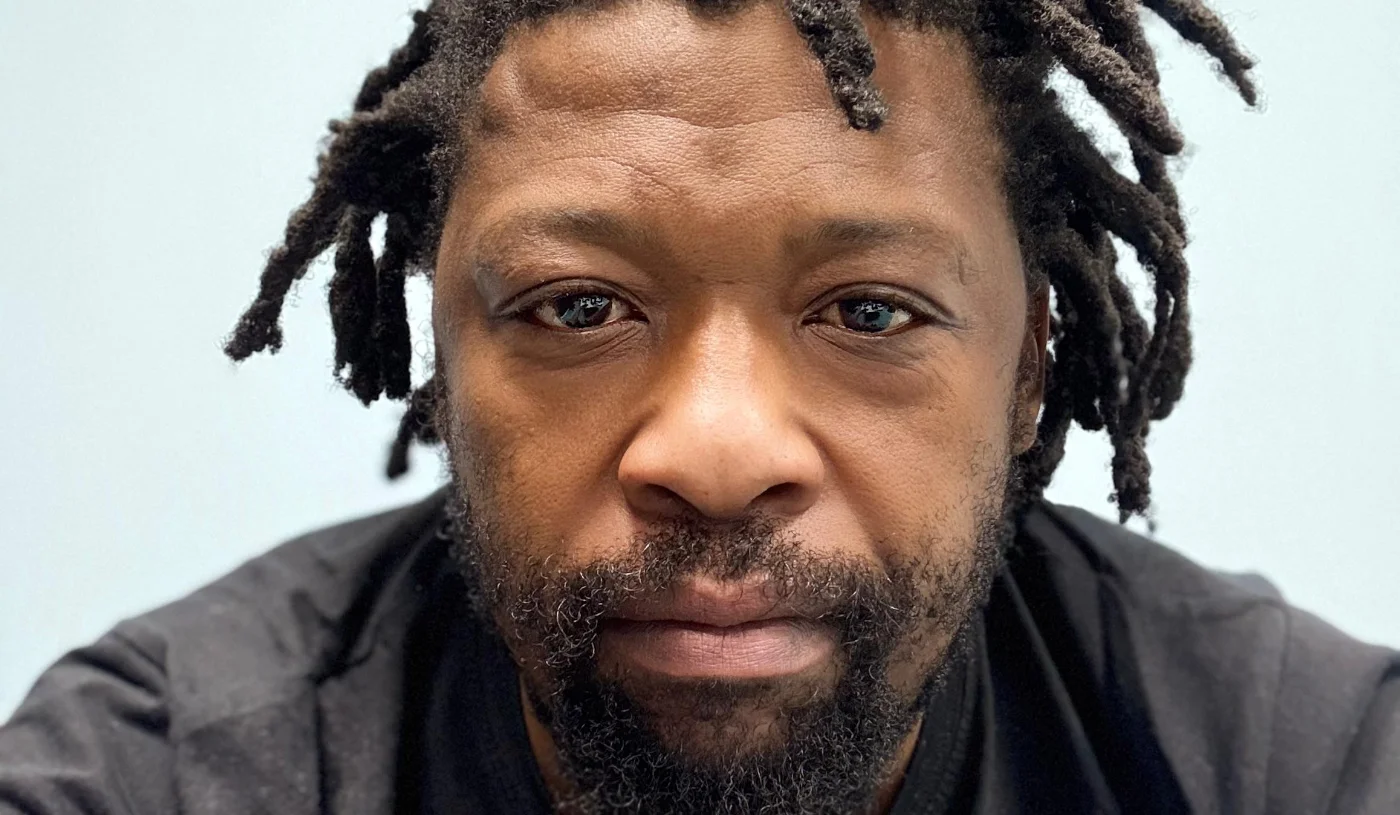
Thabiso Phepeng (b. 1981) is a South African artist whose work blends African artistic traditions, abstract expressionism, Hip Hop, and graffiti. In speaking with him, what emerged was a layered portrait of an artist shaped equally by inherited traditions, lived experience, and the shifting cultural landscapes he has moved through. From his early childhood in Limpopo, where he absorbed pattern, symbolism, and spiritual knowledge through daily life with his grandmother during apartheid, to his formal art training in South Africa and his current life in Switzerland, Phepeng’s story reveals the life-altering influences that inform his deeply introspective practice. Our conversation traced the ways Sotho and Ndebele visual languages, Western art education, and the global influence of Hip Hop intersect in his practice today.
Ilknur Demirkoparan: You learned to paint from your grandmother, who was also an artist working in a traditional form. Could you tell me about her practice and how she shaped your own path?
Thabiso Phepeng: My grandmother was, first and foremost, a ngaka, which is a traditional healer. She was also part of a cultural practice called ditema, which refers to an indigenous writing and visual marking system of Southern Africa, rooted mainly in Sotho-Tswana and Nguni cultures.
She taught me indirectly, because it’s part of the fabric of the culture, but it’s not taught. You just do it.
I was born on the way to my grandmother’s house. After my birth, my mother still had several days of travel ahead of her before reaching my grandmother’s house in Limpopo.
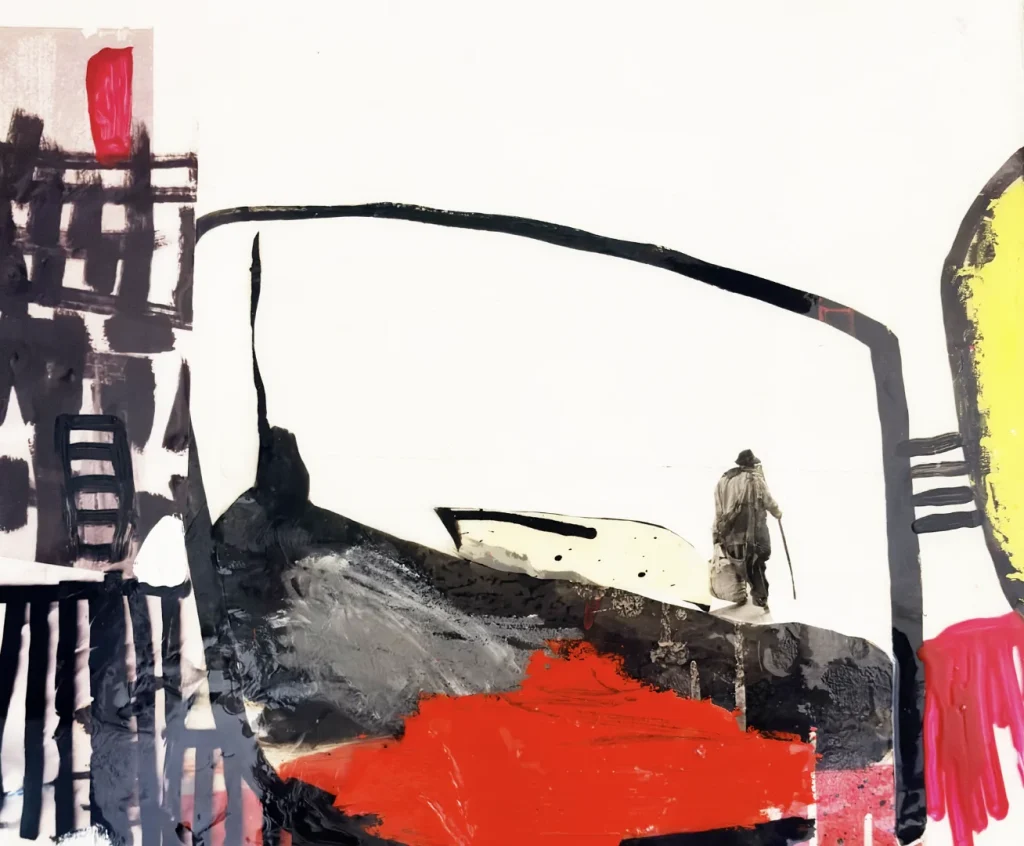
During apartheid, Black men were forced to work far from their families. Companies built men-only hostels near industrial areas, which later became the foundations of what we now call townships. These hostels were designed to separate men from their wives and children, reducing family life to a temporary condition.
During apartheid, Black men were forced to work far from their families. Companies built men-only hostels near industrial areas, which later became the foundations of what we now call townships. These hostels were designed to separate men from their wives and children, reducing family life to a temporary condition.
While men lived in hostels as migrant labourers, women were left behind to carry the full responsibility of nurturing children and holding households together. Over time, some men managed to save enough to bring their wives closer and begin building a home of their own. During that period, my father was employed as a telecommunications technician and was renting a room in Thaba Nchu, a township within Bophuthatswana. Bophuthatswana was a nominally independent homeland created by apartheid South Africa in 1977 for Tswana-speaking people, but was widely unrecognized internationally and dissolved in 1994. Meanwhile, my mother left me with her mother in Limpopo while she worked at Philadelphia Hospital in Mpumalanga, which was a part of what used to be KwaNdebele until it was disbanded in 1994. I stayed with my grandmother until my mother got a full-time job in Thaba Nchu in 1983.
Since I took my first steps, I would follow my grandmother around and watch her do her daily practice, how she mixed her paints, made her tools, and applied the paint. While observing her, I would sometimes dip my hands in the paint and ruin something when she needed to leave quickly to do something in the kitchen. So she started putting aside small bits of paint for me to play with, and that’s how I started.
She always encouraged me. Now I remember she always encouraged me. She would always say stuff like, your eyes are so good. Come here, come help me put this pin through these beads. I didn’t know that I was actually practicing beadwork with her.
So yeah, it was fun to do stuff with her, because she was always encouraging, giving me more and more, pushing me toward that. This is something I’m learning only now, when I’m being asked questions. At that time, I was not being creative. I was just doing what my grandmother was doing.
My grandmother was, first and foremost, ngaka, which is a traditional healer. She was also part of a cultural practice called ditema, which refers to an indigenous writing and visual marking system of Southern Africa, rooted mainly in Sotho-Tswana and Nguni cultures. She taught me indirectly, because it’s part of the fabric of the culture, but it’s not taught. You just do it.
ID: You were, in a way, an apprentice learning ditema from the master— your grandmother.
TP: I didn’t know how to connect that with her, but I knew that, in the greater scheme of things, this was a language. Whether it was a writing system, whether it was a pattern system, I didn’t know, because I never had that conversation with her. I imagine she practiced it on a spiritual level because she was a traditional healer. I don’t think a person of such spiritual understanding of nature and paranormal things would randomly paint the walls for decorative reasons without it connecting to what she practiced spiritually. So I’ll leave it there.
ID: Your blending of Sotho and Ndebele painting traditions is fascinating. I read that, in the Sotho tradition, symbolism and motifs mark important life events like births, weddings, or deaths. In contrast, the Ndebele tradition, which evolved during the South African Wars against the colonial powers, motifs and symbols represent feelings in relation to events. While both mark the passage of time and the lived experience through different approaches, your practice merges them into a unique personal vocabulary that traces your own journey in time and space.
TP: Yes, that marriage is there. By the time I finished high school, a lot of things happened. First was apartheid, then there was a new government, and then all the changes, like black kids were allowed to go to white schools. All these new things were happening, and I was part of this whole thing, seeing them in real time. I’m one of those people who always says, I was there when this happened. I was among the first to cross into spaces that had only just begun to change. From early childhood, I entered schools and social environments while they were still shedding the logic of apartheid and reaching toward something new. I grew up between systems—old orders dissolving, new ones not yet formed—across education, social life, and technology.
I discovered Hip Hop at a time when most South Africans were cut off from the world. During apartheid, access to international media wasn’t a given. But where I grew up — in Bophuthatswana, in the town of Thaba ’Nchu — we had access. Somehow, the signals reached us. MTV, BET, and radio. And that changed everything.
Radio was huge. We heard music as it dropped. When the Wu-Tang album came out, I heard it. We weren’t catching up years later — we were in it, right there. Most people got the music through DJs and copied tapes passed around. That’s how it moved.
I was this 12-year-old kid with a basketball, wearing Scottie Pippen sneakers, walking up to five kilometres to an Adidas-sponsored streetball court. Before that, we played on bare ground where a broken bicycle rim was the hoop. And everywhere around us, there was township graffiti. Names, politics, anger, hope — all of it on the walls. That was the atmosphere.
At the same time, I was going to the Mmabana Cultural Centre every day. Monday to Friday. I started when I was about seven or eight, around ’87 or ’88, and I stayed there until high school in 1995. Part of it was practical — my parents worked crazy hours. My mother was a nurse in a psychiatric hospital; my father worked as a telecommunications technician. They needed somewhere safe for me to be.
But Mmabana wasn’t babysitting. It was real art training. We learned still life, life drawing, sculpture, and printmaking. We had proper materials. I remember seeing Fabriano paper already back then. We were taught by Laura Slegtenhorst, who introduced us to a formal, Western way of thinking about art — structure, discipline, technique. So while all of this was happening, American popular culture, Hip Hop especially, became a major influence, running in parallel with everything else. Music, fashion, language, attitude. It all fed into how I was seeing and making.
I carried all of that with me to Tshwane University of Technology, where I was introduced to European art history. Now I’m like, wait a minute — Piet Mondrian? Why is he doing patterns that look like how my grandmother’s doing them? Who’s influencing whom? What’s happening here? I understand this.
By the time I finished high school, a lot of things happened. First was apartheid, then there was a new government, and then all the changes, like black kids were allowed to go to white schools. All these new things were happening, and I was part of this whole thing, seeing them in real time.
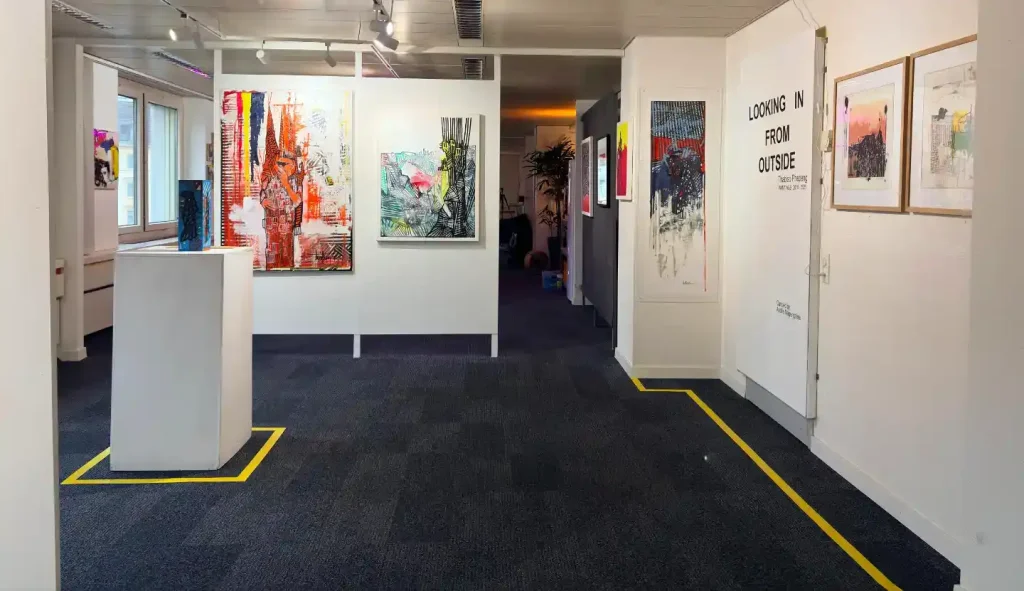
ID: Speaking of art history, we are educated to understand art from a Western perspective, which evolved from centralizing a single person’s viewpoint until modernity. In contrast, a single-point perspective is almost non-existent in non-Western traditions. Instead, the importance lies in multiple implied perspectives which, by nature, embrace abstraction.
As the Mondrian example you gave, with modernity, European artists began incorporating African and Asian influences into their work. I see your practice doing something similar in that it incorporates or synthesizes some of the Western influences, while centering the Sotho and Ndebele traditions at its core. Where I see a difference is that, in your approach, you are careful about the origins of where things came from.
TP: That tension is constant—a dance, for lack of a better word. I could choose to work overtly politically or culturally, to speak across multiple layers of lived context. I have that option. This stands in contrast to Western artists who selectively borrow what they find aesthetically pleasing from African art, detached from its histories, urgencies, and lived realities.
These artifacts would have been tools that belonged to an ngaka, a traditional healer like my grandmother. These were called artifacts when they were brought here and displayed in a museum for the longest time. For South Africans, these things are sacred.
I’ll give you an example. Just recently, our President came to Switzerland for the first time to meet with the Swiss Federal Council, but also on a mission to collect so‑called artifacts that were taken years ago from Limpopo, the same province my grandmother is from. These artifacts would have been tools that belonged to an ngaka, a traditional healer like my grandmother. These were called artifacts when they were brought here and displayed in a museum for the longest time. For South Africans, these things are sacred. No one touches them. They are only touched by the person who owns them, and they are meant for spiritual practice.
This brings up a memory from my early teens. My grandmother would organize annual meetups with other ladies in the village who practiced the same things she practiced. She would wear her ceremonial garb, and all the ladies would come dressed in their ceremonial garb. They would wear these beaded neck pieces; there would be so much color, like a color explosion. They would gather, have food and drinks, and everyone would talk, taking turns as if it were a freestyle rap battle. They would play the drums— beats so strong you would feel them in your body. Everyone would get their turn to say the things they wanted to say, using spoken language as creative expression.
I remember one day I was watching from the side. I asked my mom if it was okay for me to go in, because it’s sacred — you’re not supposed to just walk in. And one of the ladies called my name. She called me forward. And it was so weird — so, so crazy — that I was now being mentioned within this context. To me, this was Hip Hop. I remember just standing there thinking, yo, my grandma is an MC. Yeah. That’s how I connected these things.
So yes, how I approach my practice and how the West perceives how we do things are different.
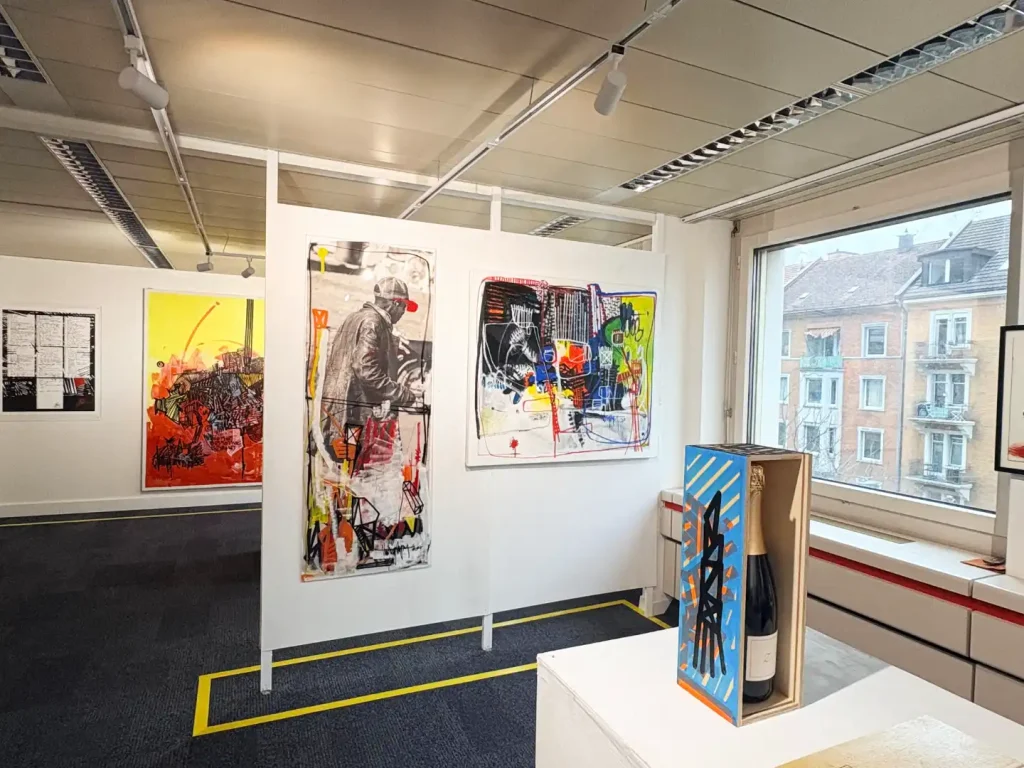
ID: Your recent show, Looking In From the Outside, returns to the concept of perspective. As someone of a non-European background, I am deeply familiar with the “gaze” you must navigate. What is so bold about your work is that it does not attempt to “educate” the viewer about your culture; instead, it requires the audience to do the work of understanding.
The work engages without the obligation to act as a cultural primer.
This approach reminds me of post-war Korean artists. Following the catastrophic splitting of Korea, many Western-educated Korean artists underwent a period of soul-searching. They rejected state-sponsored art and national exhibitions, refusing to produce the expected figurative or narrative works. Instead, they moved toward total abstraction, seeking the essence and “feeling” of Korean material culture. In a moment of immense national trauma, they radically clung to their heritage in a way that didn’t romanticize Koreanness, nor attempt to “teach” about Korean culture to the West. Much like your own practice, they insisted that the viewer meet the work on its own terms. I see that same integrity in how you treat your influences.
TP: I didn’t necessarily look at it that way, but the way you break it down makes a lot of sense. Yes, subconsciously, maybe that’s how I’m going about it. For a long time, I had completely shut down some difficult feelings, but I am processing them now.
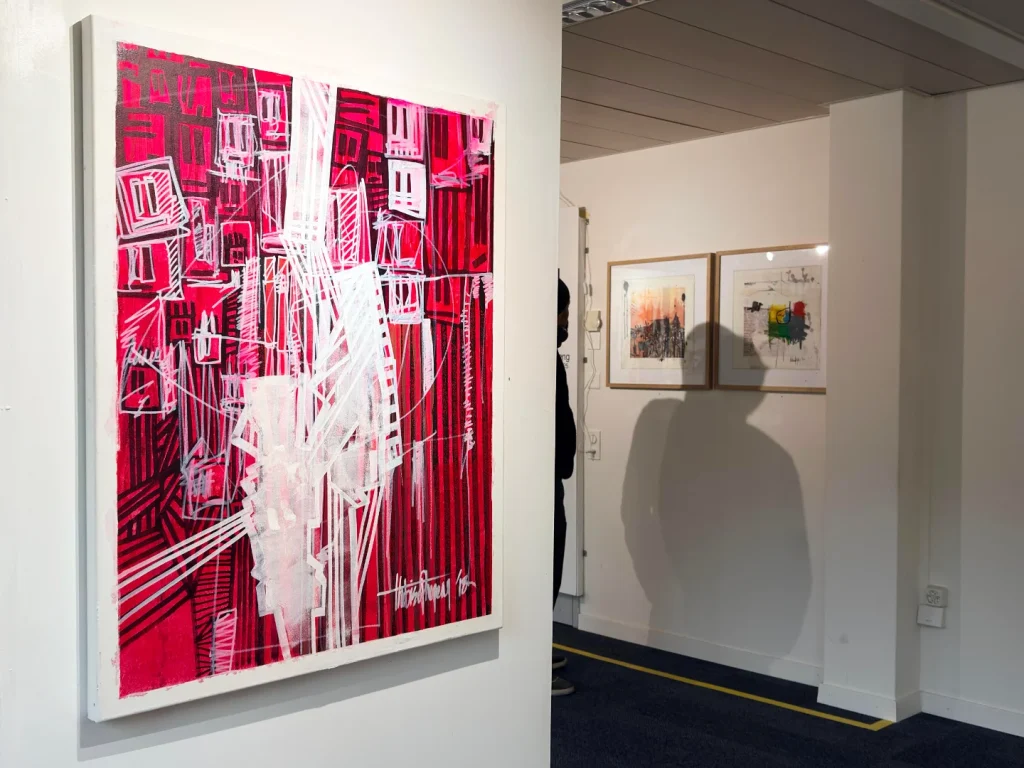
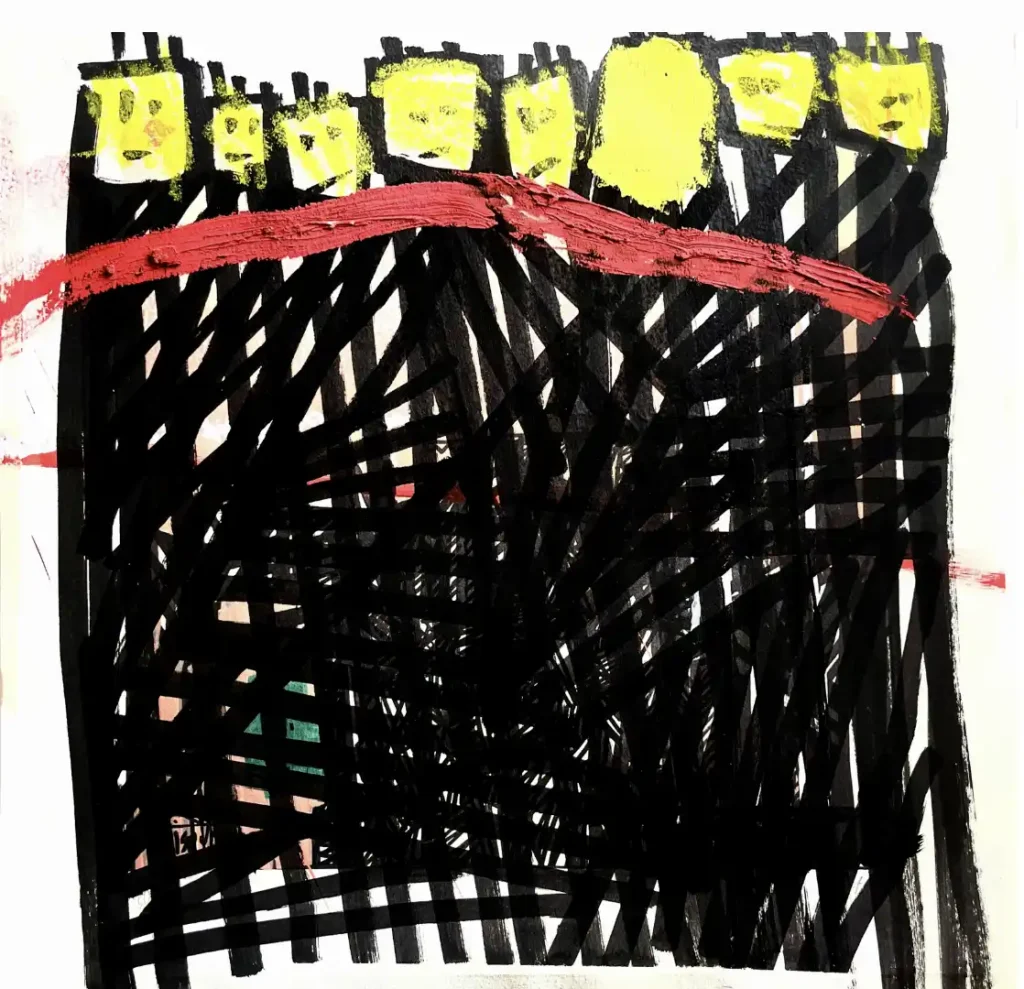
Coming to Switzerland added another twist to the narrative. You mentioned the gaze – this was when these faces developed as a motif in my work. I call them the lookings, and they represent that gaze. The expressions are minimal: geometric, block-type features with just three dots – eyes and a mouth – to suggest a human face. Yet, a slight twist of the mark can make a face inquisitive, angry, surprised, sad, or happy. These Lookings reflect the expressions I encountered while moving through the city during my first few years here.
My work is an attempt to channel all of these experiences: what it took for me, and for the masses in South Africa, to grow up within that struggle and the mess of what was happening at that time, and to stand where we are today. That is what I put into my work.
To learn more about Thabiso Phepeng and his work, please visit: https://www.thabisophepeng.com

ilknur Demirkoparan
ilknur Demirkoparan (b. Ankara Türkiye) is a Turkish-American artist whose research-based interdisciplinary practice spans painting, installation, sculpture, digital media, and creative programming to explore identity and memory through image-making, dissemination, and repetition. Demirkoparan is also the founding director of the MinEastry of Postcollapse Art and Culture. She lives and works in Zurich, Switzerland.