

Signal Beyond Collapse: The Continuum of Silence
by Bill Zima
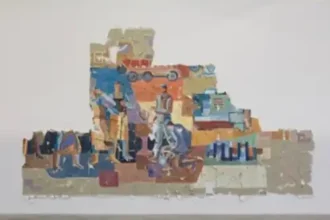
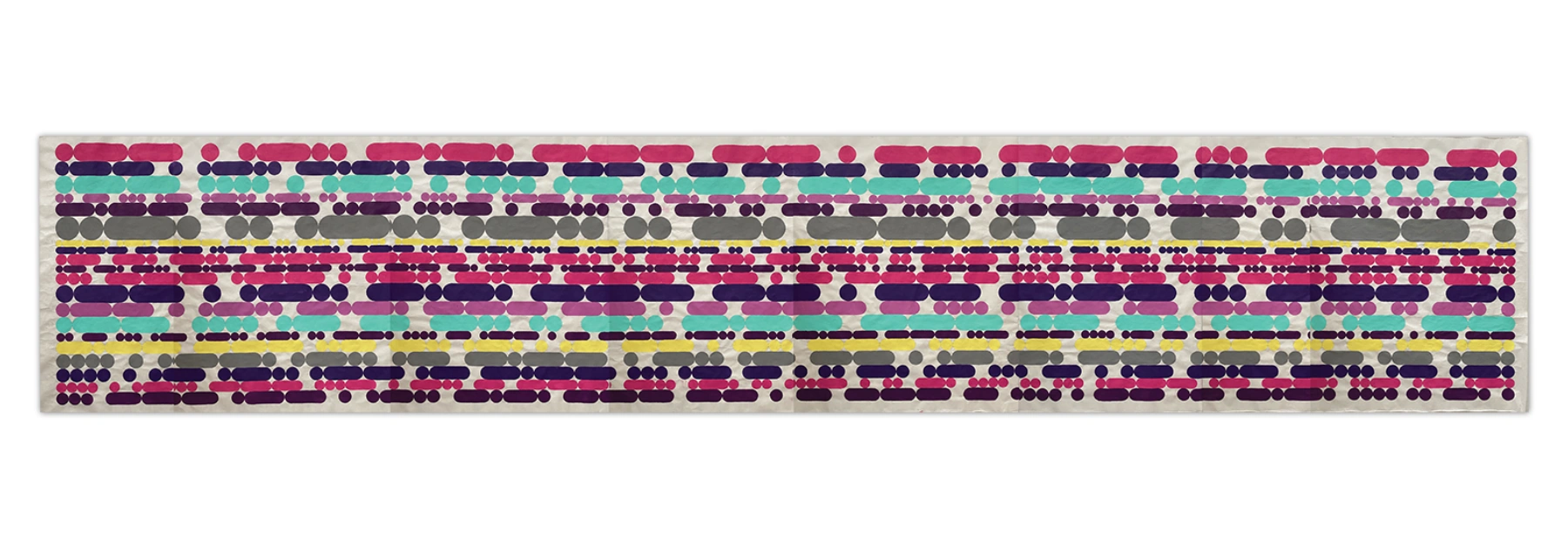
Image top: Welcome to the Machine, Bill Zima. Courtesy of the artist.
When I first encountered Jem Bendell’s “Deep Adaptation,1” I recognised not a theory but a mirror — a way of naming what I had already been living. His framework — resilience, relinquishment, restoration, reconciliation — was never abstract to me. It was rhythm. It was breath. It was the quiet structure of survival that had already entered my work long before I knew its name.
Today, I no longer think of collapse as an event. Collapse has become a field condition — the background hum of the Anthropocene, the silence beneath all signal. The Morse structures I draw and sound are not messages but gravitational forms: dots and dashes marking the slow movement of time through consciousness. They are architectures of survival that have matured into architectures of silence.
When I began transcribing language into Morse Code, I believed I was translating text. Now I understand that I was translating time itself — pulse by pulse, breath by breath. What began as survival has become a philosophy: semiotic breathwork. The point and the line, once survival marks, are now coordinates of being. They measure not distance but persistence.
Today, I no longer think of collapse as an event. Collapse has become a field condition — the background hum of the Anthropocene, the silence beneath all signal.
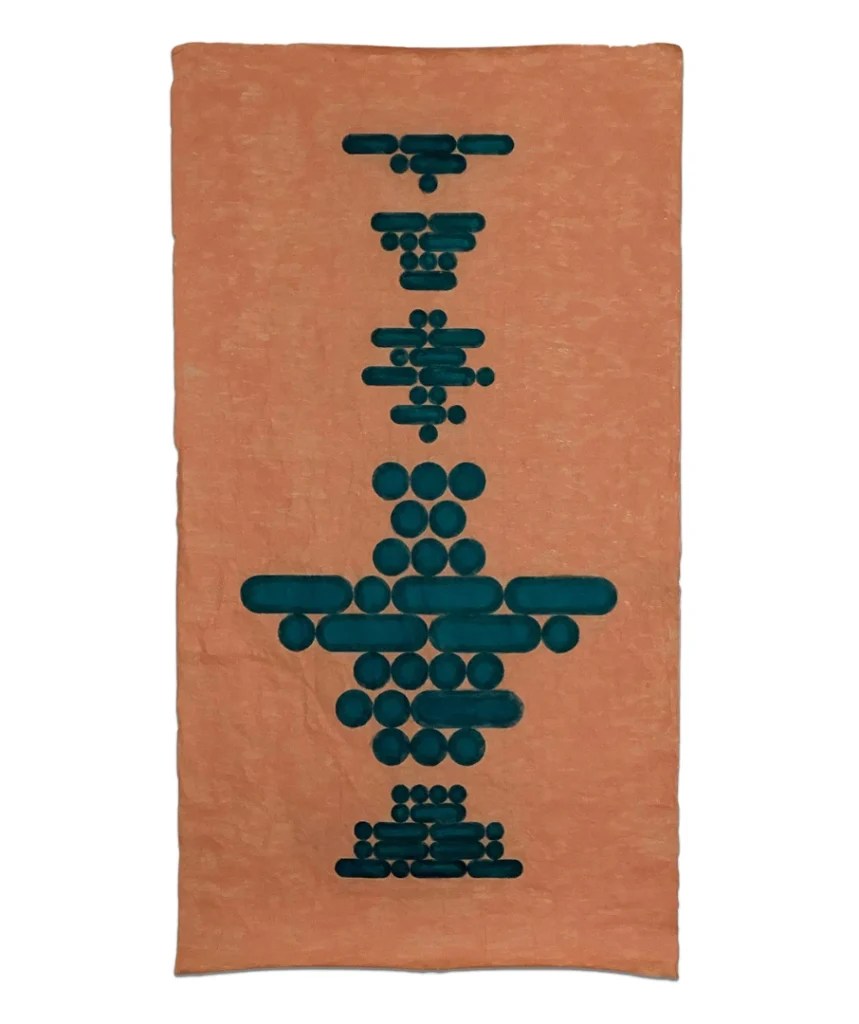
The point and the line, once survival marks, are now coordinates of being.
The years of pain, displacement, and disability have stripped away all illusion of permanence. What remains is attention. What remains is rhythm. I have learned that Deep Adaptation is not only a response to planetary collapse; it is a way of inhabiting one’s own disintegration with precision and care.
To relinquish is to yield control over meaning.
To reconcile is to remain present when language dissolves.
To adapt is to breathe within the ruins of comprehension.
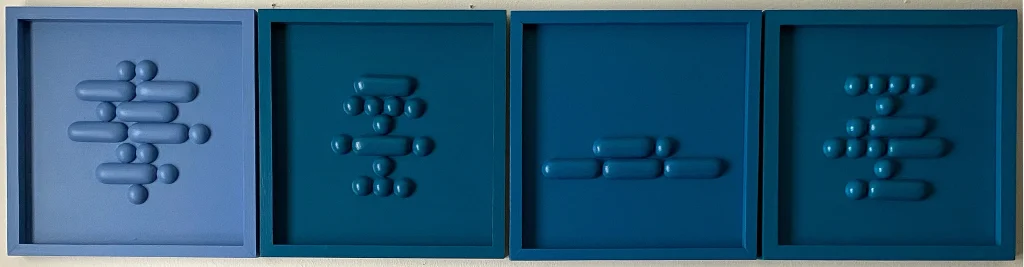
In this sense, my practice is no longer an act of communication but an act of continuity. I call it semiotic survival, or simply, silence work. The Morse mark — the dot and dash — has become an ontology. It speaks the minimal possible utterance: existence without explanation.
My soundworks now arise from this same pulse — some finished, others lingering in pre-memory. They are not compositions but atmospheres of remaining. They trace the after-image of collapse, the quiet resonance of systems that have already failed.
What I once called signal, I now call silence.
What I once called collapse, I now call continuity.
Silence, I’ve come to understand, is not the absence of sound but the continuum through which all signals travel. It is the deep architecture beneath every adaptation — a structure of holding, a code of breath.
In this sense, my practice is no longer an act of communication but an act of continuity. I call it semiotic survival, or simply, silence work.
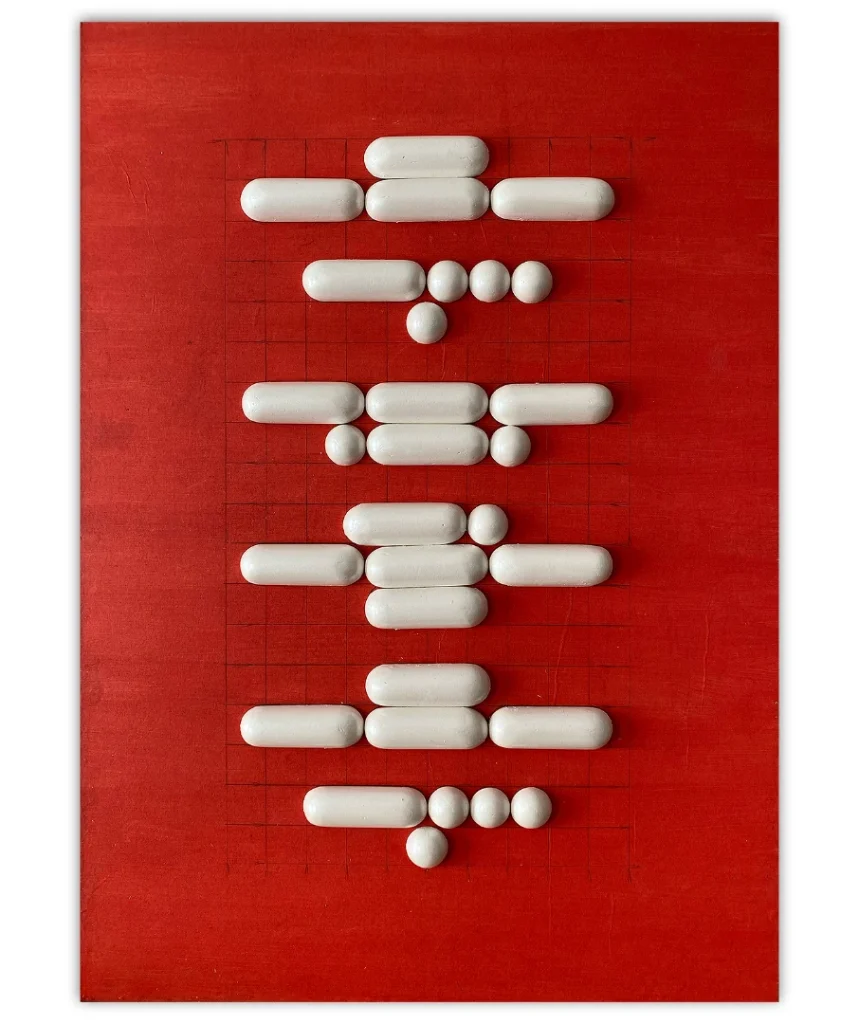
I no longer resist collapse; I map its rhythms.
I no longer hope for coherence; I dwell in its echo.
I no longer seek to explain; I trace the pattern of survival across the silence that remains.
This is no longer Deep Adaptation.
This is Deep Attention.
This is silence as architecture — signal breathing beyond collapse.
- Sustainability researcher, Jem Bendell, conceptualized “deep adaptation” as a framework for understanding and responding to the inevitable social and ecological collapse due to climate change. See: Bendell, Jem. “Deep Adaptation: A Map for Navigating Climate Tragedy,” IFLAS Occasional Paper 2, University of Cumbria, 2018. Available at www.deepadaptation.info ↩︎
About the author
Bill Zima is an Outsider Conceptual artist whose practice translates texts – spanning Jung, Derrida, Bowlby, Borges, and beyond – into Morse Code drawings, immersive soundscapes, and sculptural objects. Originally from Chicago, he studied at the School of the Art Institute of Chicago, and now lives and works in the Scottish Highlands.
https://billzimastudio.com
Editor’s Note
This essay by artist Bill Zima was written during the program Before and After Silence at the Ria Keburia Foundation in Tbilisi, Georgia, in the summer of 2025. Curated by intc, the program convened artists whose practices engage the concept of collapse from multiple disciplinary angles.