

Mauerkind Memory and Archival Transformation in Christiane Zschommler
“I was seven years old when I heard a woman scream as she was shot in No-Man’s Land, trying to escape to the West,” recalls Christiane Zschommler, now in her 60s, of how life was growing up in the eastern end of a war-torn Germany. She speaks about her photography to my American students studying abroad at New York University’s hip Berlin campus– located in the former Soviet sector within the old Pfefferberg brewery, which was closed down and repurposed into an arts hub after the collapse of the Berlin Wall. Her calm presence makes everything feel like it could be fine, a sentiment tough to accept, given the incredibly turbulent history she has endured. “The incident was never mentioned by my family or reported in any newspapers,” she continues, “but I never forgot it.”1 While there is still no reliable data on the exact number of people killed at the Wall, recovered documentation indicates that between 1961, when the Berlin Wall was first installed, and 1989, when it was finally demolished, at least 140 people were shot and killed while trying to escape to the other side.2
Zschommler grew up in a block of flats overlooking No Man’s Land– the long stretch of the highly militarized gap between the Berlin Wall’s inner and outer divisions. It was called this for being “an isolated, heavily monitored ‘death strip’ of East German territory that neither East nor West Berliners could occupy, effectively separating the two sides and preventing escape.”3 Living immediately behind the Berlin Wall meant that floodlights invaded her bedroom every night, washing over every shadow where a secret might hide. Guard dogs on leashes patrolled the quiet streets. The only other sounds were those of the passing trains. Zschommler is what they called a Mauerkind, a wall child, a term referring to the generation that was born and raised under the scrutiny of the German Democratic Republic’s (GDR) Ministry of State Security (Stasi) after the division of Germany.
Living immediately behind the Berlin Wall meant that floodlights invaded her bedroom every night, washing over every shadow where a secret might hide. Guard dogs on leashes patrolled the quiet streets. The only other sounds were those of the passing trains. Zschommler is what they called a Mauerkind, a wall child, a term referring to the generation that was born and raised under the scrutiny of the German Democratic Republic’s (GDR) Ministry of State Security (Stasi) after the division of Germany.
The Stasi’s stranglehold over the East German citizens meant that every aspect of daily life was being monitored. Zschommler laments the understanding that her generation “lived in a parallel universe, a reality alien to democracy.” And yet, despite the repressive state apparatus, she remembers the East German government’s sense of pride that was championed at every opportunity. “Sending the first German cosmonaut into space in 1978 was proof of the superiority of socialism over capitalism. The artificial Earth satellite ‘Sputnik’ orbited around the earth to predict the glowing future; the victory of communism was within immediate reach,” she explains.
When the Stasi Records Act was passed on December 29, 1991, citizens gained the right to access their files.4 Despite the Stasi’s efforts to destroy evidence, including shredding over 15,000 containers of documents in the final weeks of its existence, today a mindboggling “51 kilometres of written documents originate from the Stasi’s own archives, while a further 60 kilometres were taken unsorted from the offices of employees in 1990.”5 As most of these documents are now well-preserved, public requests to access personal files continue.
Zschommler applied to see her files in 1997, not expecting to receive much. She was, after all, an ordinary citizen, working as a public school teacher in biology and chemistry– subjects deemed safe for their perceived objectivism. Although critical of the system, she certainly did not identify herself, neither in theory nor in practice, with activism at the time. In fact, only after she was suddenly reassigned to a new school in the summer of 1989 did she begin to take a more active role in movements for the democratisation of education. And yet, it was confirmed that there were indeed stacks of documents kept on her the whole time. Personal letters exchanged between friends, postcards sent from travels, photocopies of her requests to publishers in West Germany for teaching materials and their response letters, and index cards to record all the evidence the Stasi found while searching through her mail. Her file even included the fronts and backs of envelopes and simple picture postcards. “We were transparent beings,” she recalls ironically.
When she was summoned to the district school board, she was scolded for not being a member of the state-supported youth organization, Freie Deutsche Jugend (FDJ/Free German Youth), and pressured to promote state ideology. In the files, she found reports on her work as a teacher, her perceived level of obedience, and her loyalty. Her files alone demonstrated the scale of the spy operation and the obsession with the youth. The final report commented on her dismissal from teaching: “The investigation found no evidence that Z. was used as a cover address or encouraged relocation,” she reads.
For Zschommler, photography was always a way of “validating” her experiences. “During my time in East Germany, the darkroom served as a sanctuary, a timeless space where images emerged from chemical baths.” Soon after relocating to the UK in 1992, she pursued a BA in Photography at the University of Westminster, where she began working on self-portraits to process the psychological impact of her childhood. “While revisiting and photographing the former headquarters of the Ministry for State Security in Berlin-Lichtenberg—a huge complex with thousands of offices—the familiar smell of tiles, wallpaper, linoleum, and utility furniture brought back the same feeling of numbness I always felt when visiting official buildings.” The Stasi surveillance state monitored and controlled every aspect of a person’s life, such that even the sensory register was under siege. The sheer number of informants and unofficial collaborators keeping tabs on their neighbors, colleagues, friends, and even partners allowed little room for trust.
“While revisiting and photographing the former headquarters of the Ministry for State Security in Berlin-Lichtenberg—a huge complex with thousands of offices—the familiar smell of tiles, wallpaper, linoleum, and utility furniture brought back the same feeling of numbness I always felt when visiting official buildings.” The Stasi surveillance state monitored and controlled every aspect of a person’s life, such that even the sensory register was under siege.
In 2003, Zschommler settled along a canal in Surrey and worked as a teacher of photography and art. Over the following years, she captured her surroundings during solitary walks, observing their transformation as reflected in the water. “My practice has always grown out of improvisation within limitation. The camera helped me stay connected to something beyond routine,” she explains. With her book project, Hiraeth (2016-2023), the elements of photography, text, and poetry work together to construct an emotional landscape shaped by distance and dislocation. “When working on Hiraeth, writing started to take on a more deliberate and regular form,” she explains. “Keeping a notebook was an essential part of my process since I was seeking sites of reflection.”
The Brexit vote in 2016 and the anti-immigrant rhetoric that resurfaced in the UK marked a significant shift in Zschommler’s artistic approach. The discernible parallels on closed borders and monitored spaces prompted her to question her own place in the UK. She was, after all, an outsider there. Since then, her work has delved into political issues, focusing on data extraction, language systems, and state propaganda, alongside themes in identity and community.
Through her vast body of work on state-sanctioned control, Zschommler seeks to understand the emotional repercussions of unchecked authority in contemporary surveillance societies. For Zschommler, the question is how easily knowledge can be manipulated in democracies. The project, When The Power Has Gone (2018/2024), includes the series, “File 1214:87” (2018), “Beyond Orwell” (2018), and “The Silvester Dossier” (2024). This project is the result of extensive archival research to address the scope of surveillance, ideological imposition, and the administration of everyday life in the GDR regime.
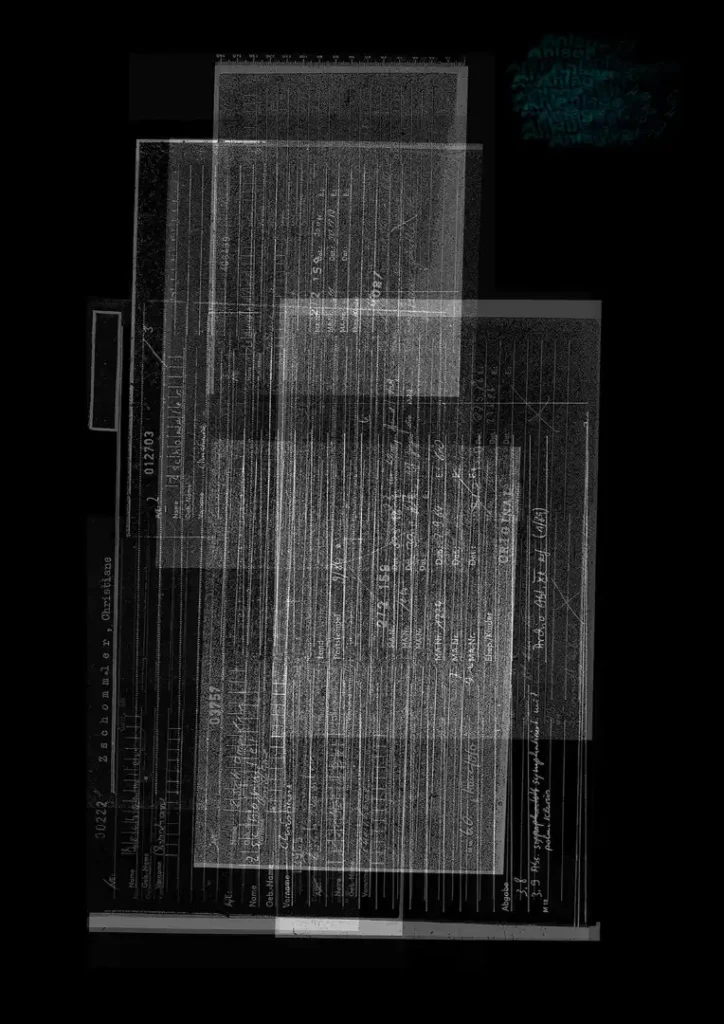
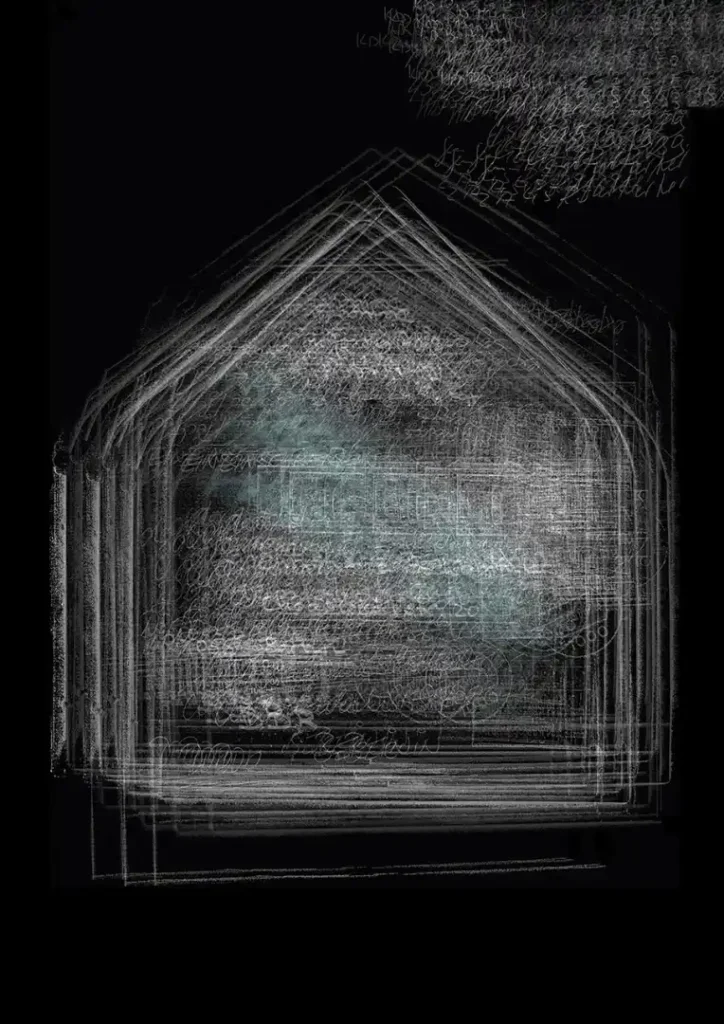
In “File 1214:87,” Zschommler transforms archival material through processes of superimposition and erasure. She layers each of the letters and the outlines of the envelopes kept in her Stasi file, resulting in a haunting display of illegible inscriptions. She is careful to avoid disclosing any person’s name so as not to repeat the discursive violence of privacy’s breach. The method of superimposition, while attending to systematic record-keeping over time, also renders the letters evidential, resulting in a palimpsest of records and witness accounts that call into question matters of memory, privacy, and rights. Elsewhere, she turns to erasure. “I erased parts of the documents to reduce them to fundamental shapes and traces of the original material,” she explains, “and retained the two entries of numbers used to catalog the documents; one marked by the Stasi and the other by the new state archives.” In the process of reassembling her own file, Zschommler peels back the layers of official History, rejecting flattened or even nostalgic claims of the past in favor of exposing the sensory complexities of living under authoritarianism.
“The Silvester Dossier” is the only piece Zschommler kept entirely untransformed. It contains forensic analyses of people’s handwriting, the type of ink used, and the hardness of the press. It includes pressure trace examination, scent sample preparation, blood type and gender determination, fingerprint pattern identification, tampering assessment, paper and writing material identification–scientifically rigorous processes that the Stasi conducted confidentially.
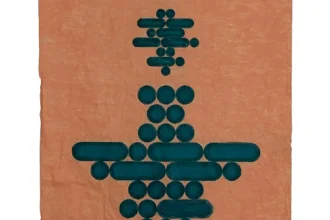
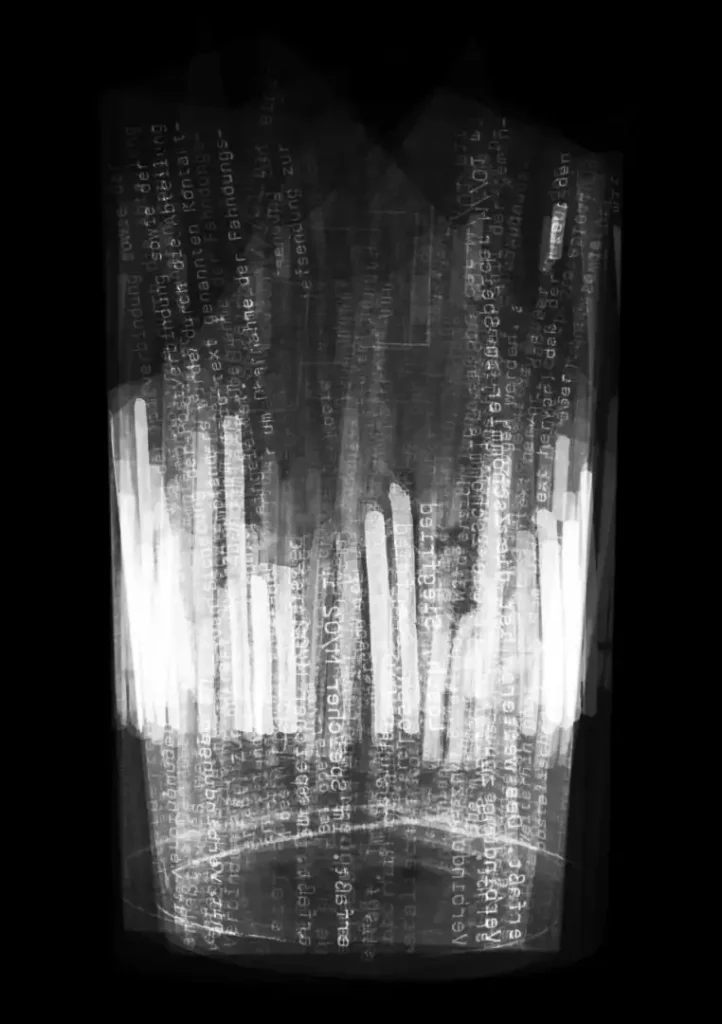
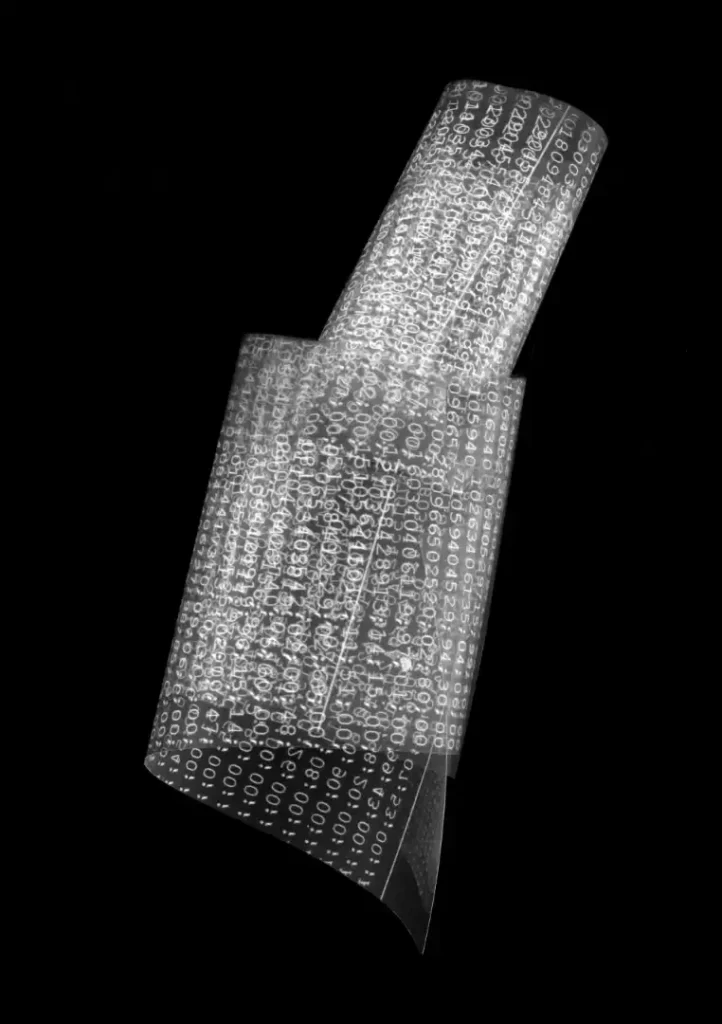
In “Beyond Orwell,” Zschommler presents a set of sixteen photographs of three-dimensional abstract forms using her own Stasi file and data related to the surveillance of East German citizens.
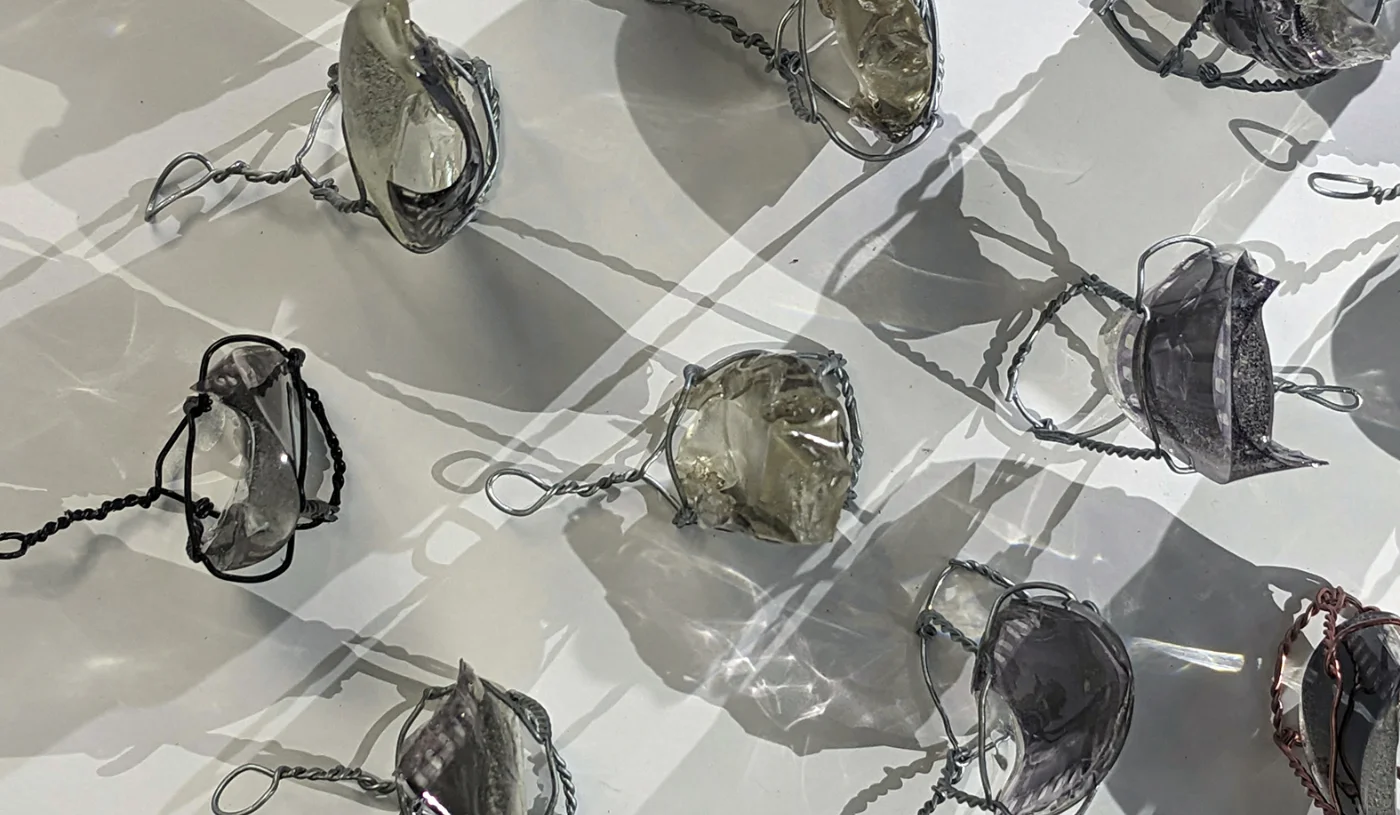
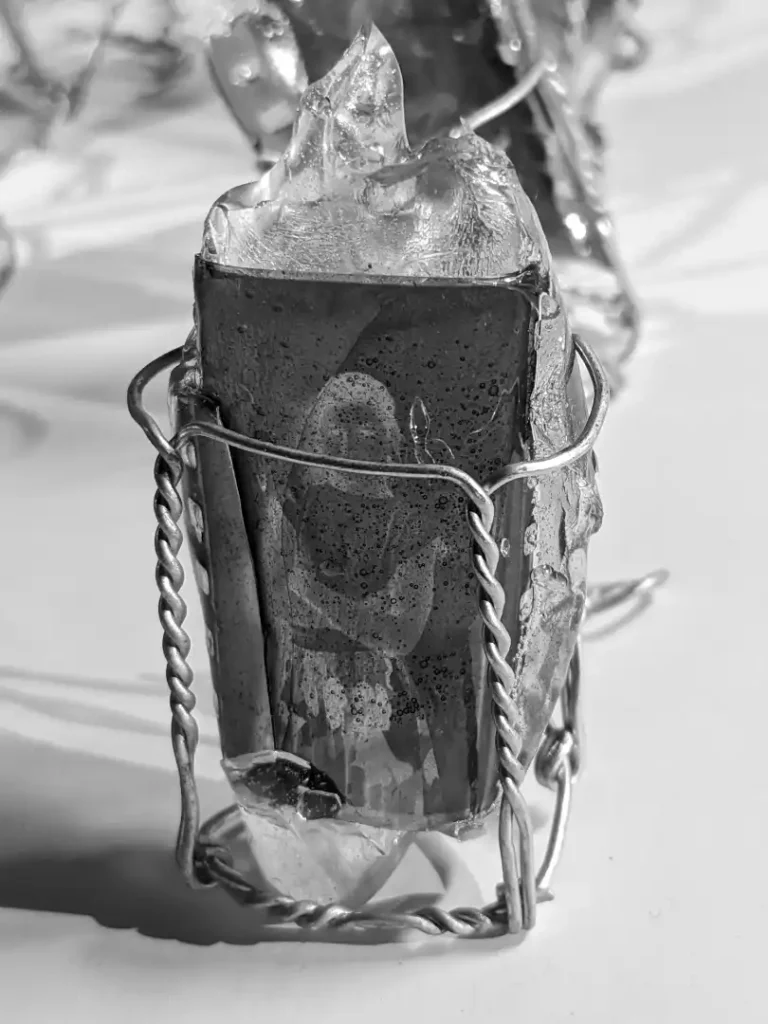
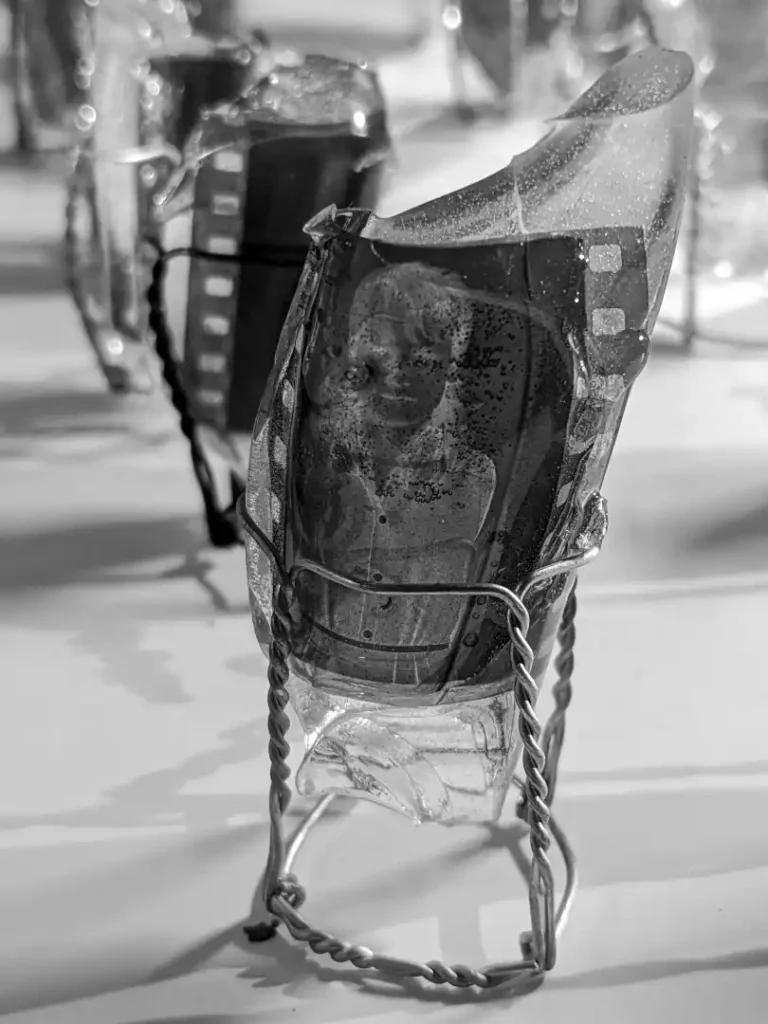
“Forgotten Doctrine” is an ongoing project that reworks Zschommler’s personal diaries, school books, teaching materials, and an assortment of GDR-era objects like badges, medals, and shell casings to show the paradigm of public education and the GDR’ demand for obedience. She approaches these remnants from her past critically, reworking them to transform them. Folding them, burying them in ash or emulsion, encasing them in resin, or embedding them in clay both intensifies and suspends the role they once played. She describes her process as an act that both preserves and obscures the past, “acknowledging ideological residue while disrupting its readability.”
Likewise, “Pavlov’s Children” explores how children are enculturated into state ideology, where education becomes a state apparatus for conditioning young minds. Referencing Ivan Pavlov’s theory of behavioural conditioning, she presents a series of anonymized and resin-encased negative portraits of the final group of students she taught in GDR, before her reassignment.
November 9 will mark 37 years since the fall of the Berlin Wall. While some memories have since faded, the surveillance apparatus of the Stasi continues to haunt the art and culture scene in Berlin.6 Zschommler’s research-based practice, spanning sound, photography, notebooks, and interventions with material drawn from personal and public archives, explores this complex history as lessons for humanity.
November 9 will mark 37 years since the fall of the Berlin Wall. While some memories have since faded, the surveillance apparatus of the Stasi continues to haunt the art and culture scene in Berlin.
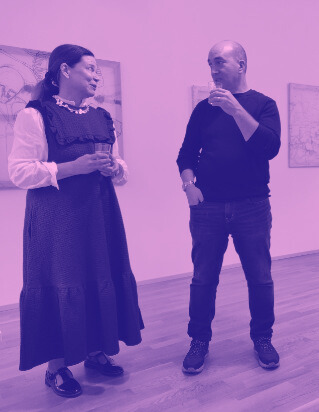
In her attentive responses to my students, Zschommler emphasized the power of the personal story while warning against the trap of nostalgia. At the end of our class that evening, as we searched for a place to eat down Schönhauser Allee in the Prenzlauer Berg district, once part of East Berlin, she recalls the day the Wall came down, and her first time walking over to the west: “I saw the cobble stones looked exactly as they did in the East, and I broke down on my knees and cried.” The realization that they were a mere heartbeat apart the whole time, though severed by a wall they couldn’t cross, was too much to bear.
While the majority of Zschommler’s work addresses the history of conflict, fear, and memory in the GDR, she also explores identity and belonging in the UK following the Brexit vote. “As migrants, we are now constantly made to justify ourselves and are affected by the ever-changing rules of the government,” she says. In more recent works, she has turned toward the abstract poetics of light, water, and movement as systems that contain their own effects. “In Until It Ends and While It Floats, I work with a single photographic image and place it into different environments. The image stays the same, but its appearance changes depending on light, water, movement, and viewpoint.” In these latest works, Zschommler surrenders the image to the uncontrollable agency of the elements, allowing the natural forces of water and wind to supersede the state’s obsession with predetermined outcomes. “Across all of my work, images are not fixed; they are shaped by what acts upon them, and what remains is never stable.”
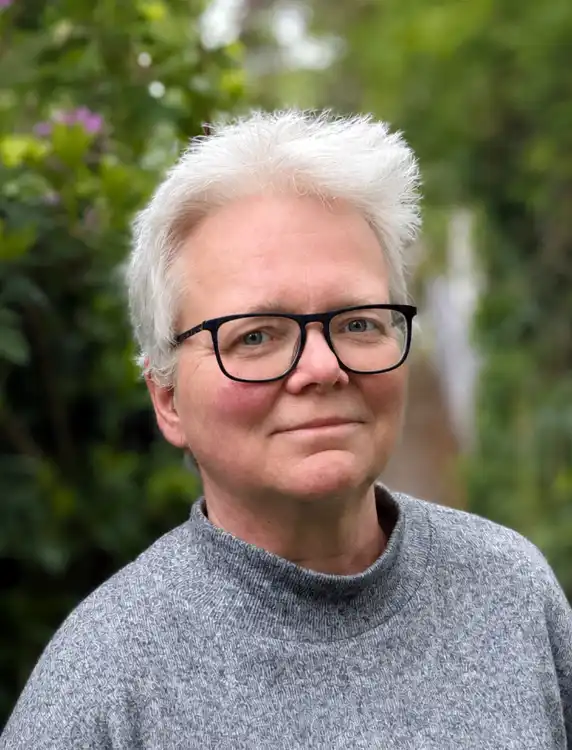
About the artist:
Christiane Zschommler is an artist whose work interrogates memory, surveillance, and the intersection of personal and collective history. Zschommler’s work has been exhibited internationally from London to St. Petersburg. She was shortlisted for the Aesthetica Art Prize and the 2015 Surrey Artist of the Year. Raised in East Berlin and now based in the UK, her work explores memory, duration, and the subtle aftereffects of political and social systems.
https://www.christianezschommler.co.uk/
Footnotes:
- For a compilation of the artist’s own writings of her experiences growing up in East Germany, see her books, When the Power Has Gone (2024) https://www.blurb.co.uk/b/11967066 and Forgotten Doctrine (2025) https://www.blurb.co.uk/b/12511915-forgotten-doctrine. ↩︎
- Hertle, Hans-Hermann and Maria Nooke, “The Victims at the Berlin Wall, 1961-1989,” Findings of a Research Project by the Centre for Contemporary History Potsdam and the Berlin Wall Foundation. Postdam/Berlin: 2017. ↩︎
- Barnstone, Deborah Ascher, “Between the Walls: the Berlin No-Man’s Land Reconsidered.” Journal of Urban Design, 21(3), 2016: 287–301. ↩︎
- Soutschek, Liza, “From Scraps of Paper to Mountains of Files – The Long Aftermath of the Stasi Files,” DDR Museum, 6 Nov 2025. ↩︎
- ibid. ↩︎
- Leeder, Karen, “The Haunted Nature of Freedom: Narratives of the German Wende,” Seminar: A Journal of Germanic Studies. Volume 61, Number 2, 2025 (125-128). ↩︎

Vuslat D. Katsanis
Dr. Vuslat D. Katsanis specializes in comparative literature, film, and visual culture with a focus on Turkish and global migrant cultural production and critical theory. She is the co-founding director of the MinEastry of Postcollapse Art and Culture (MPAC), an independently run art and research space based in Switzerland.