

Ariel Francisco – Conversation & Three Poems, and the Poetry of Jacques Viau Renaud in Translation
for the series, The American Wing
curated by Carlie Hoffman and Tiffany Troy
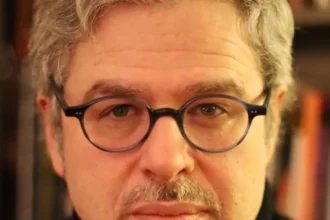
Carlie Hoffman & Tiffany Troy: “We all have moons / we long to return to,” writes Ariel Francisco, and what is spectacular about his manner of perception is staying attuned to the singing of young men along the East River and the Bronx or the radio waves of his grandmother reciting poetry. These poems share valences with the poet that Francisco translated, Jacques Viau Renaud, a Dominican poet who tries to tell us about his homeland, with its legacies of imperialism and colonization.
How would you describe the origins or influences of your language and voice as a writer? How do you feel place(s) influences your poetics?
Ariel Francisco: My first poetry teachers, Denise Duhamel and Campbell McGrath, were my earliest and heaviest influences. They brought poetry to life in the real world for me. I loved Keats and Plath when I was younger; they showed me the initial magic that language was capable of. But the poems of Duhamel and McGrath were the first that reflected the world I knew: the speaker in Duhamel’s poem arguing with their husband on the Hollywood Beach Boardwalk (that I frequented as a teenager) or the speaker in McGrath’s poem pondering the various Slurpee flavors at the 7-11 while buying a six-pack of beer. I didn’t know that the details of one’s own actual reality could make their way into a poem until I read them.
They taught me about place as well. Where you spend your time and what you’re surrounded by have such a deep influence on you as a person. My earliest poems began that way: considering my surroundings and my place within that place. I was, I think, in the Flâneur tradition, though I wouldn’t have known that at the time. But wandering and observing was, and continues to be, an incredibly healthy poetic and meditative space for me. That’s why I hate the suburbs and car-centric infrastructure so much. It’s hell for my poetry-brain.
CH & TT: What is poetry to you? In “On Learning My Grandmother was also a Poet,” you write of how “the radio waves never disappear,/ never truly dissipate, not really.” In your view, what can poetry offer people today? What personal meaning does poetry hold for you?
AF: Poetry can offer a means of understanding the world and understanding ourselves. Poetry is a way of building something through language that can’t be communicated in any other way. There’s a reason people turn to it in times of grief, love, loneliness, confusion, etc, even if they have no other relationship with poetry. The desire for it exists in all of us, I think; it’s very naturally human. I’m not sure that’s true for the other writing genres.
Poetry means everything to me. It’s given me a life and a way of being in the world I never thought was possible.
CH & TT: Is there a poem or poetry collection you believe everyone should read at least once—and why?
AF: No. Perhaps I am taking this question the wrong way, but I am very opposed to any kind of universality.
CH & TT: As a translator and poet, how do you feel translating Jacques Viau Renaud has shaped your poetics?
AF: Translating Jacques Viau gave me access to a different kind of political poem. Or rather, thinking about the political in a different way. The emotion I tend to associate with the political is anger, and I find anger to be one of the more difficult emotions to write through. But Viau writes with a lot of hope and a lot of precision. He doesn’t write towards the powers that be but towards his countrymen, his peers, and comrades across the globe.
CH & TT: What are your hopes for the future of American poetry and its place in our culture?
AF: Poetry is inextricable; it will always have a place in the culture. It will continue to grow and change with the new generations (shout out to my students!). I have no specific hopes for it, I’m just excited to see where it goes and where it continues to take me.
ALONG THE EAST RIVER AND IN THE BRONX YOUNG MEN WERE SINGING
after Lorca
I heard them and I still hear them
above the threatening shrieks of police sirens
above the honking horns of morning traffic,
above the home crowd cheers of Yankee Stadium
above the school bells and laughter
lighting up the afternoon
above the clamoring trudge of the 1 train
and the 2 and 4, 5, 6, the B and the D
above the ice cream trucks warm jingle
above the stampede of children
playing in the street,
above the rush of a popped fire hydrant
above the racket of eviction notices
above the whisper of moss and mold moving in
above the High Bridge and the 145th St bridge
above mothers calling those children
to come in for dinner, to come in
before it gets dark, to get your ass inside
above them calling a child that may never come home
above the creaking plunge of nightfall
and darkness settling in the deepest corners
above the Goodyear Blimp circling the stadium
above the seagulls circling the coastal trash
along the East River and in the Bronx
young men are singing and I hear them,
eastbound into eternity even
as morning destars the sky.
BATON BLEU
Winter’s revelation is always the same:
longing.
A flamingo flies over head
a pink ax cutting through the sky.
I think of Tony Montana
alone in his hot tub
his world and everything in it
on the cusp of collapse,
watching a nature documentary
seeing the flamingos taking flight
and yelling fly pelican!
I think of Florida. I think of home.
The haters will say the bird you see
above is simply a spoonbill but
they’re just trying to bring you down, man.
I think of only seeing flamingos
on lottery billboards. A good omen.
I think of how Baton Rouge
was once a part of West Florida.
I think of how nothing escapes
the swamps reclamation.
I think of Charles Morton
who thought birds flew
to the moon for winter.
We all have moons
we long to return to.
I watch the flamingo.
I watch until it fades
into the pink of sunset
until it becomes
what is missing.
ON LEARNING MY GRANDMOTHER WAS ALSO A POET
for Gloria Celeste Rosa Henriquez, 1939—1979
My dad says it slowly,
as though the memory
is arriving word by word
in the stale autumn wind.
He looks towards the radio tower,
prodding the sky
like an impatient child.
“She used to bring me here” he says,
eyes on the tower.
“She used to bring me here
with her when she would read.
She would read her poems
on the radio.” He says this
as though it’s being revealed to him.
As though he’s learning this
for the first time. As though
he could have forgotten.
As though just realizing
this might have affected him.
Oh, how I remember my dad
at his typewriter, then his word processor,
then his computer. How I remember
the books lining the walls, the photo
of his mother on the shelf. I ask
if he still has her poems and he says
no, that they were lost when his sisters
cleared out the house after she died.
After he moved to the US. His eyes
still on the tower. I want to tell him
that radio waves never disappear,
never truly dissipate, not really.
I want to tell him that they grow
infinitely smaller, infinitely more
spread out, infinitely infinite,
but still there. Forever.
I want to tell him I am listening.
HOMELAND
By Jacques Viau Renaud, translated by Ariel Francisco
Homeland
from your starved latitude I felt
my people rise through sonorous essences
and heavy breaths.
Homeland
I felt how you grip through my blood
squeezing my throat
bruising my neck
screaming along to my song.
I witnessed your anguish from afar
blooming in treetops
erupting from fruit,
in fleeing birds
inhabiting your blank expanse of fallen tears.
I heard your voice
lift on the scent of my cry
and my sweat
the sweat of a peasant worker
cut down like old mountain pines.
I saw you streak across the cheeks of children
fighters
finding death’s final form.
I heard your mothered call with withered children
you yourself withered
fertile mother
impoverished by those stealing your bright ores
like children’s tears
and dissolving the steel of your bowels
in the intense embers of hatred
thieves funded by kings.
Oh homeland
my homeland
everytime I speak your name
a fissure forms in my heart
and from its depths your eyes stare back
and see the world
and see America
the Antilles divided by the dollar
the one-armed man working for the dollar
the woman shattered in the suburbs
or brothels
for the dollar,
and up on our beaches dressed in linen
laid in large gray luggage
atop giant biers bringing our America
together with rehearsed smiles:
the dead.
Oh homeland
bloody pennant
from the screaming center
I await you
I hear you
I sing.
Maybe you, my homeland
are thinking of me
of my friend Juan or Pablo
who died for you
severed
in the yellow grimace of the cornfield
where the sun multiplies in every grain.
My homeland, crying,
bleeding, suffering,
but we
are bare, every minute building
towards the terrible advent of justice.
My homeland, crying,
but soon we’ll cut the cords that constrain your song.
We’ll burn with a new fire
that grows and keeps growing
over the laborers bruised backs
where the sun that leans into them
comes to rest.
Oh homeland
you’ll grow
you’re growing.
The town’s hunger
the town’s hatred
a tornado of shouts and angry insatiable thirst
terrible shuddering of this world
fall of the unforgiving dollar
slowly rebuilding
grain by grain
every stolen stalk of hope.
Homeland,
those still unborn
those of us born and growing
and continue to be born and grow
always
every minute—
hatchet, stick, and picaxe
knives and clubs in our fists
naked
charging through the trees—
will make our land
of this land
a home for work and justice
song of nature, stone, and humanity
treading the Antillean earth
scaffold of the Caribbean.
PATRIA
Patria
he sentido cómo desde tu hambrienta latitud
sube mi pueblo a través de sonoras esencias
y palpables respiraciones.
Patria
he sentido como corres a través de mi sangre
agolpándote en mi garganta
golpeándome la nuca
acudiendo a gritos a mi canto.
He presenciado desde lejos tu angustia
crecida en la copa de los árboles
explotando en los frutos
en las aves migratorias
que habitan tu desnuda extensión de lágrima caída.
He escuchado tu voz
levantada por el aroma de mi llanto
y de mi sudor
del sudor del campesino y del obrero
talados como viejos pinares montañeses.
Te he visto correr sobre las mejillas de nuestras jóvenes
luchadoras
hallando la forma definitiva de la muerte.
He escuchado tu grito madre de niños tísicos
tísica tú misma
madre fecunda
pauperada por los que te roban el aluminio limpio
como lágrimas de niño
y disuelven el acero de tus entrañas
en las intensas ascuas del odio
el robo y el crimen de reyezuelos a sueldo.
Oh patria
mi patria
cada vez que pronuncio tu nombre
se abre una herida en mi corazón
y desde allí tus ojos me miran
y miran al mundo
y miran a América
a las Antillas divididas por el dollar
al bracero manco por el dollar
a la mujer destrozada en los arrabales
o en los prostíbulos
también por el dollar,
que arriba a nuestras playas vestido de lino
en grandes maletas grises
catafalcos enormes que traen a nuestra América
junto a las sonrisas ensayadas,
la muerte.
Oh patria
girón de sangre
desde el centro del llanto
te espero
te escucho
y te canto.
Quizás Patria mía
estás pensando en mí
en mi amigo Juan o en Pablo
caídos por ti
cercenados
sobre la amarilla sonrisa de los maizales
donde el sol se multiplica en granos.
Lloras, Patria,
sangras, sufres,
pero nosotros
desnudos, estamos construyendo a cada minuto
él advenimiento terrible de la justicia.
Lloras, Patria,
pero no tardaremos en destruir las cuerdas que atan tu canto.
Incendiaremos con un fuego nuevo
que crece y seguirá creciendo
sobre las magulladuras del torso campesino
donde el Sol siempre a sus espaldas cayendo
descansa.
Oh patria
crecerás
estarás creciendo ya.
El hambre del pueblo
el odio del pueblo
tornado grito y cólera sed insaciable
estremecimiento terrible del orbe
caída irremisible del dollar
reconstruirá lentamente
grano a grano
cada mazorca robada a nuestra esperanza.
Patria,
los que no han nacido
nosotros los que hemos nacido y crecemos
y volvemos a nacer y a crecer
siempre
a cada minuto
hacha, palo y pico
cuchillo y garrote en nuestras manos
sin ninguna indumentaria
desnudos
trocaremos la vegetación
haremos de esta tierra
nuestra tierra
morada del trabajo y la justicia
canto de prole vegetal, mineral y humana
hollando la faz de la tierra antillana
hoy cadalso del hombre caribe.
I’M TRYING TO TELL YOU ABOUT MY HOMELAND
By Jacques Viau Renaud, translated by Ariel Francisco
I’m trying to tell you about my homeland,
the one that begins to slip
where the guasabara trees grow,
the fragile peppers,
the thirsty dust covered pitchers,
the strange
yellowish grass,
lonely spear measuring the heart of my island.
I’m trying to tell you about my homeland,
from here,
from my saline lair,
from Santo Domingo,
maybe I’ll speak of both:
two sibling mounds
cardinal points of my sorrow
fallen from the wind’s rose
like lovers breaking their embrace.
I’m trying to tell you about my homeland,
of her children, her peaks and valleys,
her sleepy plains
where countless rivers are born:
crowds of crystals huddled in the hollows.
My homeland
is a plateau
of betrayed green and golden maize
that cross the seas to go far off
while the people of the mountains and plains
grow with hunger.
It’s a land of many bare mountains,
loud rivers of cheerful wildlife
and violent flora.
My homeland cracked giving birth
and her children wither
and look like dying leaves
confusing themselves in the forest of thin barked trees.
There, imprisoned between two clay arms,
rock and stone,
sleeps a city that smells of death,
of sugarcane,
of earthly virgin liquor
like resin of great gnarled roots.
It’s a city of nameless streets
and ghostly alleys
even the cracks hold life,
even the sewers,
quietly traversed by rats and bats.
It’s a city full of countless children,
of countless children that never grow up,
that never learn the colors of lanterns
or dawn, with bread and without tears,
of children who ripen in tombs,
the tamped ground adorned with sunflowers,
and the light of blind eyes.
Here, I was born,
from here I left, tied to the blood,
alone, after years,
I found the red stain inside me,
and then learned to read the leaves,
to speak with the earth
and be quiet when she reconstructs the history
of the many dead that sustain her,
of the blood that fed her fruits,
the screams that sustained her precocious mountains.
So much time has passed since I left,
nothing has changed
those same bald mountains go on,
the same vegetation and sunflowers,
the same dark coffee fields and starry pastures,
only hunger has grown,
there’s no more space in the cemeteries
or in the crying eyes
or in my island homeland,
only dimensions of dirt and rags,
of the dead unhinged from the mud by the wind.
This is my homeland,
an extension of Santo Domingo crying,
this is my haunt,
extension of the cry echoing from the mountains,
the roads,
the forests,
from the other side of the blood,
from the port of Saint Nicholas,
to the face of the brackish crystal
and the bones of deaf fish piled on the beach
becoming mountains
between hungry nets and sunburned fisherman.
Here the dead turn into handsome fish,
covered in algae, silent moss,
cliffs of rumors protected by the night.
I’ve been trying to tell you about my homeland,
of my homelands,
of my island
that has long divided man
there, where they came together to create a river.
ESTOY TRATANDO DE HABLAROS DE MI PATRIA
ESTOY tratando de hablaros de mi patria,
aquella que comienza a deslizarse
allá donde crecen las guazábaras,
las cayenas frágiles,
los cántaros sedientos y polvorientos,
la yerba rara,
amarillenta,
solitaria lanza midiendo el corazón de mi Isla.
ESTOY tratando de hablaros de mi patria,
desde aquí,
desde mi guarida salina,
desde Santo Domingo,
quizás os hable de ambas:
son dos terrones complementarios
puntos cardinales de mi tristeza
caídos de la rosa de los vientos
como amantes cuyo abrazo se rompieran.
ESTOY tratando de hablaros de mi patria,
de su prole de montes y altibajos,
de planicies soñolientas,
donde ha mucho parieron ríos:
muchedumbre de cristales apiñados en las hondonadas.
MI PATRIA
es una tierra elevada
de dilatados herbazales y doradas mazorcas
que cruzan los mares y se van muy lejos
mientras los hombres del monte y la llanura
se dilatan hambrientos.
Es una tierra con muchos montes pelados,
sonoros ríos de apaciguada fauna
y violentos vegetales…
CRUJE mi patria al parir
y sus proles se reducen
y parecen hojas desprendidas
confundiéndose en los bosques con la magra corteza de los
árboles.
ALLÍ, aprisionada entre dos brazos de arcilla,
roca y piedra,
duerme una ciudad que huele a muerto,
a caña madura,
a virgen alcohol terrosa
como resina de nudosas raíces destacadas.
ES UNA ciudad de calles sin nombres
y atajos de espanto,
habitada hasta en las grietas,
en las cloacas,
quedamente recorrida por las ratas y los murciélagos.
ES UNA ciudad de muchas proles numerosas,
de millares de niños que nunca crecieron,
que nunca supieron el color de los faroles
ni del alba con pan y sin lágrimas,
de niños que maduraron las tumbas,
la tierra apisonada adornada de girasoles,
y la luz de las pupilas ciegas.
ALLÍ he nacido,
de allí partí atado a la sangre,
solo, después de los años,
descubrí en mi pecho la mancha roja,
entonces aprendí a leer en las hojas,
a hablar con la tierra
y a callar cuando ella reconstruía la historia
de los muchos muertos que la sustentan,
de la sangre que alimentó sus frutas,
del llanto que sostuvo la precocidad de sus montes.
MUCHO tiempo ha transcurrido desde que partí,
nada ha cambiado,
siguen los mismos montes pelados,
la misma vegetación de vegetales y girasoles,
de cafetales oscuros y pastizales estrellados,
sólo el hambre ha crecido,
ya no hay lugar en los cementerios
ni en los ojos llanto
ni en mi Isla patrias,
sólo dimensiones de tierra y harapo,
de muertos desencajados en el vientre del barro.
ASI es mi patria,
prolongación del Santo Domingo que llora,
así es mi guarida,
prolongación del grito que recorre los montes,
los caminitos,
los bosques,
desde el otro lado de la sangre,
desde la mole de San Nicolás,
hasta la frente de cristal salobre
y esqueletos de peces mudos amontonados sobre la playa
creciendo y haciéndose montañas
entre redes hambrientas y ahumados pescadores.
Allí los muertos se hacen peces hermosos,
algas extensas, musgo silencioso,
o acantilado de rumores que la noche protege.
HE QUERIDO hablaros de mi patria,
de mis dos patrias,
de mi Isla
que ha mucho dividieron los hombres
allí donde se aparearon para crear un río.
About the authors:
Ariel Francisco is the author of the forthcoming We All Have Moons We Long to Return to (Texas Review Press 2028), All the Places We Love Have Been Left in Ruins (Burrow Press 2024), Under Capitalism if Your Head Aches They Just Yank Off Your Head (Flowersong Press 2022), A Sinking Ship is Still a Ship (Burrow Press 2020), All My Heroes are Broke (C&R Press 2017), and eight books of translations from Bolivia, Chile, Colombia, the Dominican Republic, Guatemala, and Haiti. His work has been published in The New Yorker, American Poetry Review, Academy of American Poets, POETRY Magazine, the New York City Ballet, and elsewhere. He is an Assistant Professor of Poetry and Hispanic Studies at Louisiana State University. https://arielfrancisco.com/
Jacques Viau Renaud (1941—1965) was born in Haiti and raised in the Dominican Republic following his father’s exile in 1948. During the Dominican Revolution of 1965, he joined the rebel forces in support of ousted president Juan Bosch, fighting against the US backed dictatorship. He was killed in battle at age 23. Poesia Completa was published by Editorial Cielonaranja in the Dominican Republic in 2005 and Selections From Permanence of the Cry and Other Poems (CUNY Lost & Found) and Poet of One Island (Get Fresh Books), his first English translations, were published in 2024.
Acknowledgments:
“ALONG THE EAST RIVER AND IN THE BRONX YOUNG MEN WERE SINGING” and “BATON BLEU” were first published in The New Yorker; “ON LEARNING MY GRANDMOTHER WAS ALSO A POET” was first published in Paperbag Magazine; “HOMELAND” was first published in Solstice Magazine; “I’M TRYING TO TELL YOU ABOUT MY HOMELAND” was first published in Sinking City.